Our research methodology
We combine automated discovery with verification at the source, so every figure in your report is traceable to the page that published it and every absence is reported honestly.
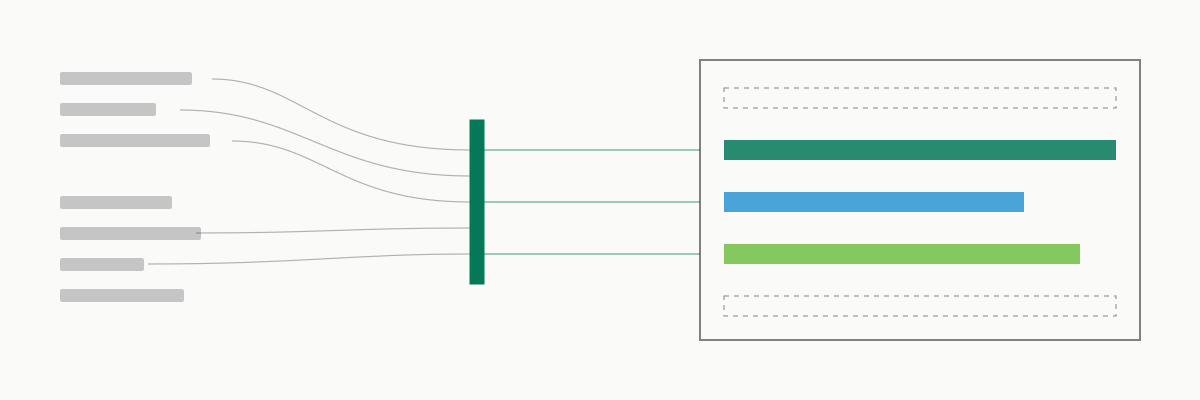
How we collect data
Competitive data in the sports industry changes constantly. Operators shift open play hours, launch peak season rates, or test new formats monthly. To deliver reliable statistics, we use a multi-phase data validation pipeline.
Automated map discovery
We check local search registries, Google Maps, and municipal licensing directories to list every active or proposed pickleball venue in your target zip codes.
AI-assisted research and synthesis
We read each facility's own public pages for court counts, published pricing, membership tiers, programming types and amenities.
Verification at the source
Every researched claim is re-checked at the public page that published it before it can enter your report. Anything that cannot be verified at its source is reported as not found rather than estimated, and an automated honesty gate blocks any report that breaks that standard. A person reviews anything the gate stops before it is released.
Every value in the report carries the public source it was read from and the date that facility record was collected. We do not publish unreferenced estimates.
Data confidence labels
Every competitor metric in our database is tagged with one of four confidence ratings to prevent operators from acting on assumptions.
Verified
Read directly from the facility's own published page and re-checked at that URL before it entered the report. The strongest label we assign.
Public source
Extracted directly from active public websites, booking portals, court schedules, or official marketing channels. Highly reliable, with timestamps of extraction.
Estimated
Inferred rather than read, with the value itself stating what the inference rests on. Prices are never estimated: an amount is published, or it is reported as not found.
Needs review
Two public sources disagree. The report prints both readings with their sources rather than choosing between them or averaging them away.